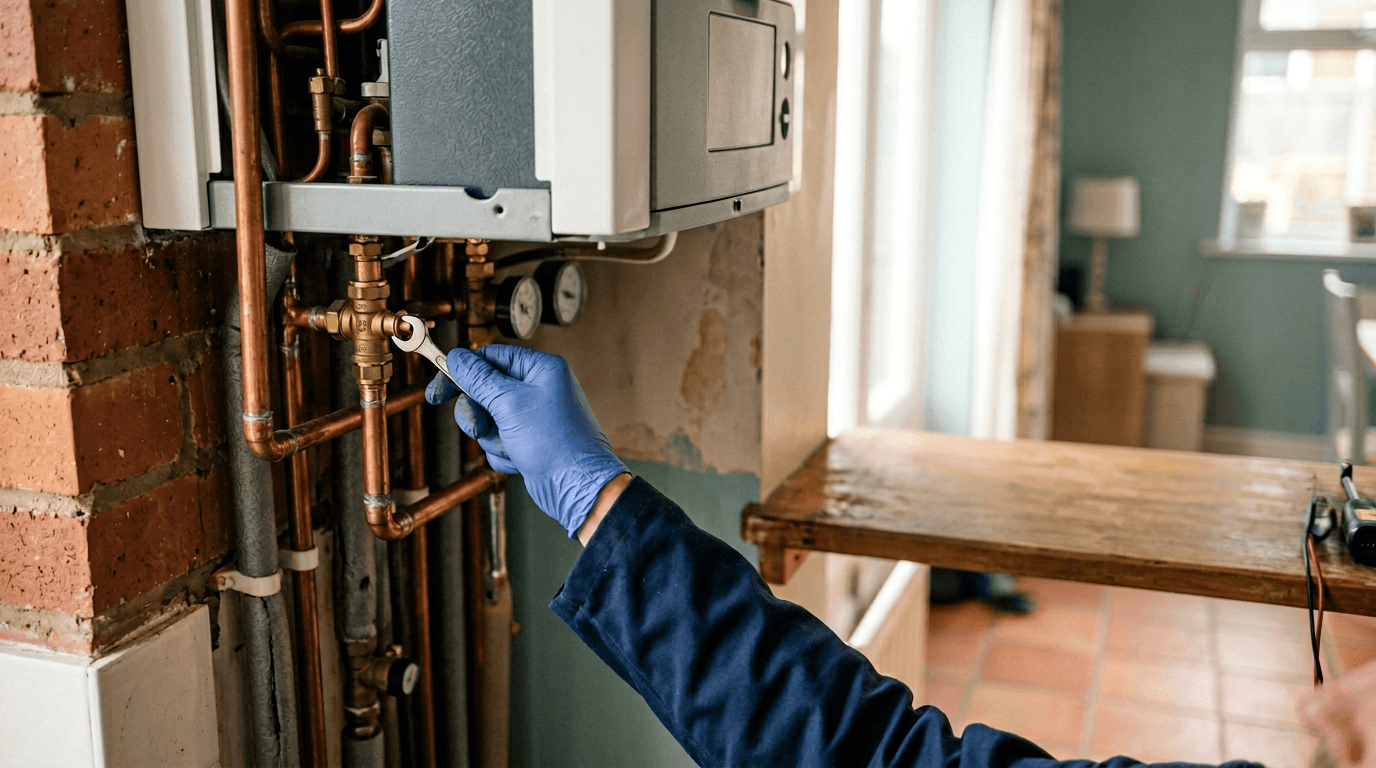
Most repair disasters do not start as big problems. They start as a small one — a reported leak, a dodgy socket — that sat in an inbox while everyone assumed someone else had it. Weeks later it is water damage, a cold tenant, and a letter from a no-win-no-fee firm. The fix is not spending more; it is having a system so nothing gets lost between "reported" and "done".
Here is the workflow.
General guidance, not legal advice.
Step 1: Capture the report properly
The moment a tenant reports something, it needs a timestamp and a home that is not your personal inbox. Record what was reported, when, and by whom — ideally with a photo from the tenant. This is not bureaucracy: the date a hazard was reported is the single most important fact if it ever becomes a dispute, and "I told him weeks ago" versus your dated log is what decides who is believed.
Step 2: Triage by urgency
Not every repair is equal. A rough hierarchy:
Triaging stops the genuinely dangerous thing from waiting behind the trivial one.
Step 3: Know your legal duty
Repairs are not just good service, they are the law. Section 11 of the Landlord and Tenant Act 1985 requires you to keep in repair the structure and exterior and the installations for heating, water, gas, electricity and sanitation. On top of that, damp and mould and other hazards engage the Homes (Fitness for Human Habitation) Act 2018 and HHSRS, and a council can serve an Improvement Notice.
One thing to get right, because there is a lot of confusion: Awaab's Law: with its fixed repair timescales — currently applies to social landlords (since 27 October 2025), not the private rented sector. The Renters' Rights Act carries the power to extend it to private lets, but that is not yet in force. So a private landlord's binding duties today are Section 11, fitness for habitation and HHSRS — already enough reason to move fast — with the Awaab clock heading for the PRS later.
Step 4: Brief the contractor well
A good contractor visit starts with a good brief: what the problem is, where, the tenant's contact details and access arrangements, and any photos. Give proper notice for access — at least 24 hours in writing for a non-emergency, at a reasonable time. Vague briefs mean wasted visits, which mean delay, which is the enemy. Keep a couple of reliable trades lined up before you need them, not scrambled for at the point of an emergency.
Step 5: Close the loop and keep the trail
The job is not done when the contractor leaves — it is done when you have confirmed the fix with the tenant and logged it: what was done, when, by whom, and the invoice. That record is your defence against a disrepair claim, your evidence for tax (repairs are deductible; improvements are not), and the reason the next person who looks at the property knows its history.
Why the system beats good intentions
Every landlord intends to handle repairs. The ones who avoid disrepair claims have a process that does not depend on remembering: report captured, triaged, actioned, closed, logged — every time. That is exactly what turns a frightening letter of claim into a five-minute export of the dated history.
How LetCompliance helps: tenants raise maintenance requests with photos, each timestamped on receipt; you triage by urgency, brief and dispatch a contractor, and keep a dated repair history on every property, so the report never sits forgotten in an inbox, and the paper trail that protects you builds itself.
Sources
What a disrepair claim actually costs
The reason to run repairs properly is not tidiness. It is that the alternative has a price, and most landlords have never seen it quantified.
A tenant with an unresolved disrepair problem has three routes, and they are not mutually exclusive.
A disrepair claim. The tenant claims damages for the period they lived with the defect. Awards are typically expressed as a percentage reduction in rent for the affected period — commonly in the 20 to 50 per cent range depending on severity and how much of the property was affected, higher where a home was close to uninhabitable. On a £1,100 rent, a 30 per cent award over eight months is around £2,640, before legal costs, which frequently exceed the damages themselves.
A counterclaim inside your possession case. This is the one that changes outcomes. If you bring a Ground 8 claim for arrears and the tenant counterclaims for disrepair, the damages are set off against the arrears. A counterclaim large enough to drop the balance below the three-month threshold does not just reduce what you recover — it can defeat the mandatory ground entirely, at the hearing, after you have paid the court fee. We have set this out in full in the disrepair counterclaim as a possession defence.
The council. A complaint triggers an HHSRS inspection and can produce an Improvement Notice. Beyond the cost of the works, this is worth taking seriously for a reason landlords miss: continuing to let in breach of an improvement notice is an offence that exposes you to a Rent Repayment Order of up to twelve months' rent — a maximum that was doubled on 1 May 2026.
None of these is triggered by a repair being difficult. They are triggered by a repair being ignored, and by the landlord being unable to show otherwise.
Damp and mould: handle this one differently
It is the most common serious complaint, the one most often answered badly, and the answer landlords give is usually the thing that sinks them later.
The instinct is to reply that it is condensation caused by drying laundry indoors and not opening windows. Sometimes that is even partly true. It is still the wrong first response, for two reasons: it puts you on record dismissing a hazard before anyone has investigated, and condensation is frequently a building problem wearing a lifestyle costume — inadequate extraction, cold bridging, failed insulation, a broken trickle vent.
A defensible sequence:
Attend and record. Photographs, the affected rooms, and readings if you have a damp meter. Do this even if you are confident it is condensation.
Establish the type. Penetrating damp comes from a defect outside — roof, gutters, pointing, a failed seal. Rising damp shows a tide line low on the wall. Condensation appears on cold surfaces, in corners, behind furniture, worst in winter.
Fix the building side first, whatever you believe the cause is: extractor fans that actually vent outside and run long enough, clear trickle vents, working heating, insulation where it is cheap to add.
Then talk about ventilation: as advice given alongside works you have already done, not instead of them. That framing is both fairer and far more defensible.
Follow up. Re-inspect after a few weeks and record the result. A closed report with a follow-up inspection is a complete answer. An open one with a lecture about windows is a claim waiting to be made.
Access, and what to do when a tenant will not let you in
A repair you cannot get to is still your problem, and this is where well-intentioned landlords create liability.
You must give at least 24 hours' written notice and attend at a reasonable time. The tenant can still refuse. You have no right to force entry, and letting yourself in with your own key without consent risks harassment or unlawful eviction allegations — a criminal matter, and far worse than the repair.
What to do instead is simply to keep making the attempt and to record every one of it:
That record does two things. It discharges your duty as far as the tenant allows, which is the answer to a later disrepair claim. And in a genuine emergency — an escape of water, a gas or electrical hazard — it evidences why you had to act, alongside the emergency services or a contractor rather than alone.
Every point above is an evidence problem before it is a repair problem. The tenant's report is logged with its date, a work order goes to a named contractor, the access notice is recorded, and the completion evidence and invoice sit against the property — which is the document that answers a disrepair claim or a council enquiry. Start logging repairs properly — free for one property, no card.
Frequently asked questions
What are a landlord’s repair responsibilities?
Section 11 of the Landlord and Tenant Act 1985 requires you to keep in repair the structure and exterior and the installations for heating, water, gas, electricity and sanitation. Damp, mould and other hazards also engage the Homes (Fitness for Human Habitation) Act 2018 and HHSRS, and a council can serve an Improvement Notice. The practical duty is to respond promptly and keep a dated record of what was reported and done.
Does Awaab’s Law apply to private landlords?
Not yet. Awaab’s Law, with its fixed repair timescales, applies to social landlords (since 27 October 2025). The Renters’ Rights Act carries the power to extend it to the private rented sector, but that is not in force. So a private landlord’s binding duties today are Section 11, fitness for human habitation and HHSRS — reason enough to act fast — with the Awaab timescales heading for the PRS later.
How should a landlord handle a repair report?
Capture it with a timestamp (not just in your inbox), triage it by urgency — emergency within hours, urgent within days, routine scheduled — brief the contractor properly with access and photos, then close the loop by confirming the fix with the tenant and logging what was done and the invoice. The dated record is your defence against a disrepair claim and your evidence for tax (repairs are deductible; improvements are not).